The Process at a Glance
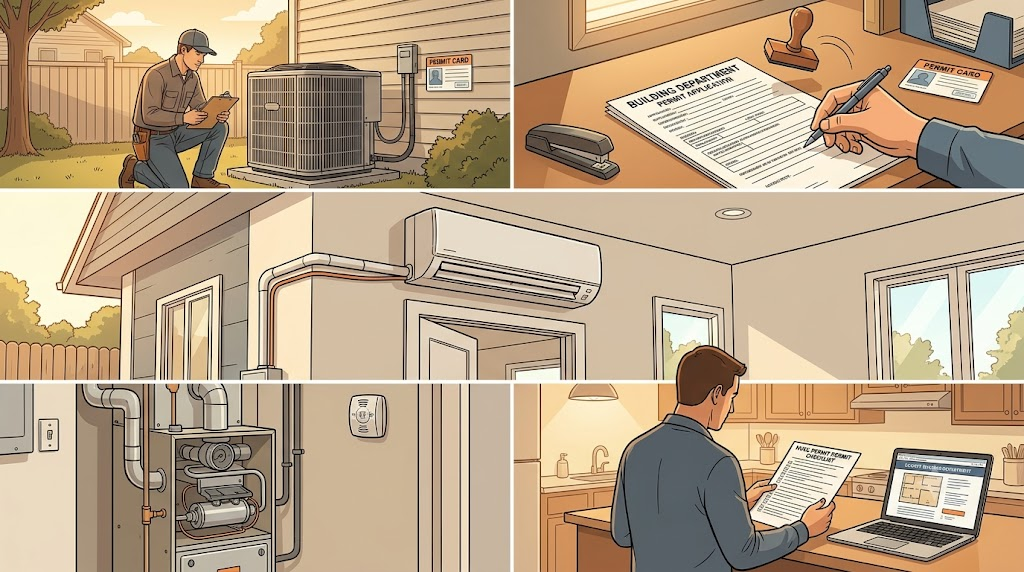
The typical residential HVAC permit process has five steps. Your contractor handles most of them — but knowing what's happening protects your interests:
- Confirm permit is required and identify the right office
In most states (all 50, for new installs; 47 for replacements), a permit is required. Identify whether your jurisdiction is the state, county, city, or township. See our state guides for your jurisdiction.
- Submit permit application with equipment details
The application requires: job address, contractor license number, equipment description (type, make, model, tonnage/BTU, fuel type), and an estimated project value. For residential replacements, no engineered drawings are typically required. Most jurisdictions now accept online applications.
- Pay the permit fee and receive permit number
Fees range from $75–$300 for residential replacements depending on state and jurisdiction. For straightforward residential replacements without plan review, permits are typically issued same day or within 24 hours. The permit number and permit card must be at the job site during installation.
- Complete installation — permit card posted at job site
Installation proceeds after the permit is issued (except in declared emergencies, where a next-day retroactive permit is acceptable). The permit card must be visible at the job site throughout the installation.
- Pass final inspection — permit is closed
After installation is complete, a final inspection is scheduled. The inspector verifies the work meets code. If it passes, the permit is closed and the record is filed. Keep a copy of your closed permit — you'll want it for your home sale records and insurance documentation.
What Your Contractor Should Handle
In most states, a licensed HVAC contractor is the permit applicant. This means your contractor should:
- Apply for the permit before work begins (not after)
- Pay the permit fee (they'll pass it on in their quote — ask for it to be itemized)
- Post the permit card at the job site
- Schedule the inspection
- Be present or have a representative present during inspection
- Address any inspection failures and schedule re-inspection
- Provide you with a copy of the closed permit after final approval
Always confirm permit status before work begins. Ask your contractor: "What is the permit number?" If they can't give you one, the permit hasn't been issued yet — and work should not start until it is (except in a documented emergency).
Pro Tip: Verify the Permit Yourself
After your contractor says the permit is pulled, spend 5 minutes verifying it. Call your local building department with your address and ask them to confirm a permit is open. This takes the guesswork out of whether your contractor actually followed through.
Realistic Timeline for a Residential HVAC Permit
| Step | Typical Time | What Can Slow It Down |
|---|---|---|
| Application submitted to permit issued | Same day – 24 hours | Plan review required (new installs), peak season backlogs |
| Installation (once permit issued) | 4–8 hours (replacement) | Equipment availability, crew scheduling |
| Inspection request to inspection appointment | 1–5 business days | High volume periods (summer, winter), understaffed departments |
| Inspection to permit close (pass first time) | Same day | Inspector paperwork delays, portal processing |
| Total (best case) | 2–3 days | |
| Total (typical) | 5–10 days |